



VARIABILITY IN EMPIRIC ANTIBACTERIAL AND ANTIFUNGAL USE IN PEDIATRIC ONCOLOGY PATIENTS WITH FEBRILE NEUTROPENIA
METHODS: We conducted a prospective study in 5 public pediatric oncology units in Greece (9/2016-6/2017).Data collected included demographic, clinical, laboratory, and use of antibacterial and antifungal antibiotics.The first antibiotic initiations for up to 15 unique patients were recorded each month and patients were followed for 7 days. Episodes with FN were extracted.Fever was defined as a recorded axillary temperature of ≥37,5ο C and neutropenia as absolute neutrophil count (ANC)≤500cells/μL(recorded or expected by the physician).Empiric antibiotic use on the first day and antifungal use within the first 4 days was analyzed.
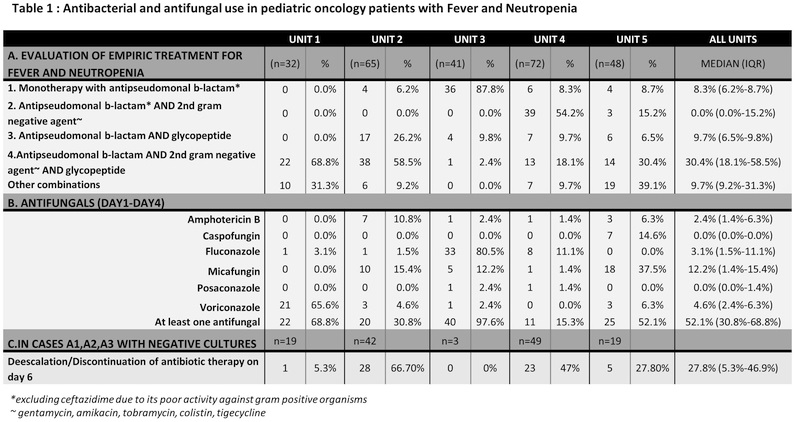
RESULTS: Among 258 FN episodes, initial empiric therapy was monotherapy in 50 cases (19.3%).In 34% of all FN cases an antipseudomonal b-lactam with a second gram-negative agent and a glycopeptide was administered. There was variability in antibiotic and antifungal use among the units(Table 1). 45.7% of the cases received at least 1 antifungal agent within the first 4 days of the course. The median rate of de-escalation/discontinuation of antibiotic therapy on the 6th day in cases with negative cultures was 27.8%(IQR: 5.3%-46.9%)(see table 1).
CONCLUSIONS: Variability of empiric antibiotic and antifungal use among pediatric oncology units in Greece for children with FN was detected. These results are important for identifying targets for antimicrobial stewardship in the setting of increasing resistance and the limited arsenal of new antibiotics.