



Epidemiology of Enterococcus spp. Infections from the Neonin Infection Surveillance Network
METHODS: neonIN is a multi-national neonatal infection surveillance network which records prospectively-collected infection data from 60 units in the UK, Greece, Estonia and Australia. All infection cases reported to neonIN from 2004 to May 2016 were extracted. Infection was defined as a positive culture from a sterile site (e.g. blood, cerebrospinal fluid). Early and late-onset infection were defined as infection before or after 48 hours of life respectively. Statistical analyses (including multivariate regression) were performed using the Stata 14 statistical package.
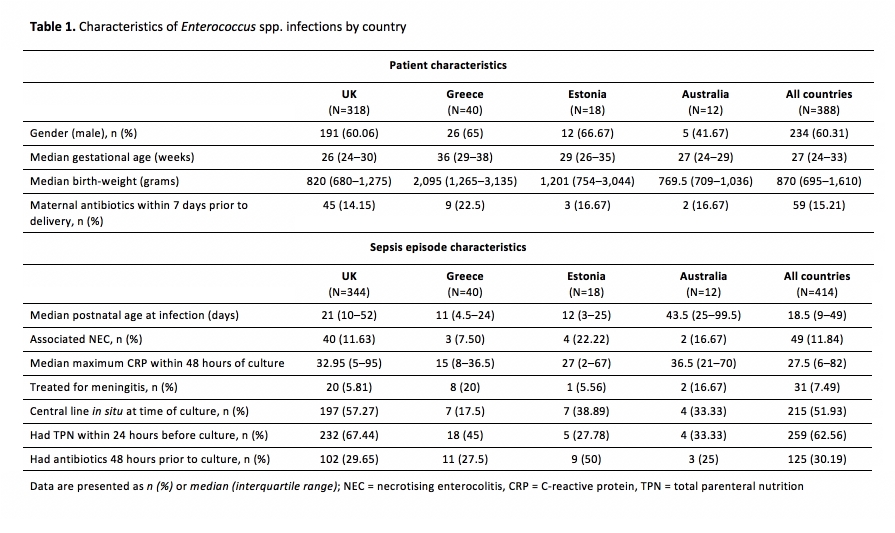
RESULTS: 414 enterococcal infections were reported in 388 infants (total of 4,083 infection episodes in 3,602 infants). Enterococci were the 2nd most common cause of late-onset infection (385/3,481 isolates). Table 1 presents enterococcal infection characteristics by country. On multivariate analysis, compared to other infections, enterococcal infections occurred at a greater median postnatal age (18.5 versus 13 days, p<0.001), and were strongly associated with NEC (OR 1.50, 95%CI 1.08-2.10, p=0.017). Antimicrobial susceptibilities were available for 288/416 (69%) enterococcal isolates. There was low resistance to vancomycin (3%) and teicoplanin (4%), but high resistance to ampicillin (17%) and gentamicin (38%).
CONCLUSIONS: We demonstrated an association between neonatal enterococcal infection and NEC, suggesting that NEC prevention may also have a role in reducing these infections. Further, enterococci were frequently resistant to first line empirical antibiotics such as ampicillin and gentamicin – of relevance in considering empiric antimicrobial policies.