



Healthcare-Associated Factors Correlated with Neonatal Coagulase-Negative Staphylococcus spp. Infection
METHODS: neonIN is a multi-national neonatal infection surveillance network which receives prospectively-collected infection data from 60 units worldwide. Infection episodes from 2011-2016 were extracted from neonIN (with infection defined as a positive culture from a sterile site, e.g. blood, CSF). Infection data were then synthesised with results of a unit-specific questionnaire distributed to neonIN units. The questionnaire covered basic unit characteristics (based on British Association of Perinatal Medicine (BAPM) standards) and healthcare-associated factor data relevant to 2011-2016. Univariate and multivariate analyses were performed using the Stata 14 statistical package.
RESULTS: 25 of 60 (42%) units responded to the survey, of which 21 were Level-3 (NICUs). Table 1 shows how various healthcare-associated factors affected the risk of CoNS versus other infections. Increasing numbers of trainee medical staff increased the odds of CoNS infection (per 1 increase: OR 1.08, 95%CI 1.03-1.13, p=0.003), while meeting BAPM recommendations for intensive care nurse:patient ratios (i.e. 1:1) decreased the odds of CoNS infection (OR 0.52, 95%CI 0.32-0.85, p=0.009). CoNS were less likely to be isolated from UK/Australian than Greek/Estonian units (OR 0.32, 95%CI 0.11-0.96, p=0.041).
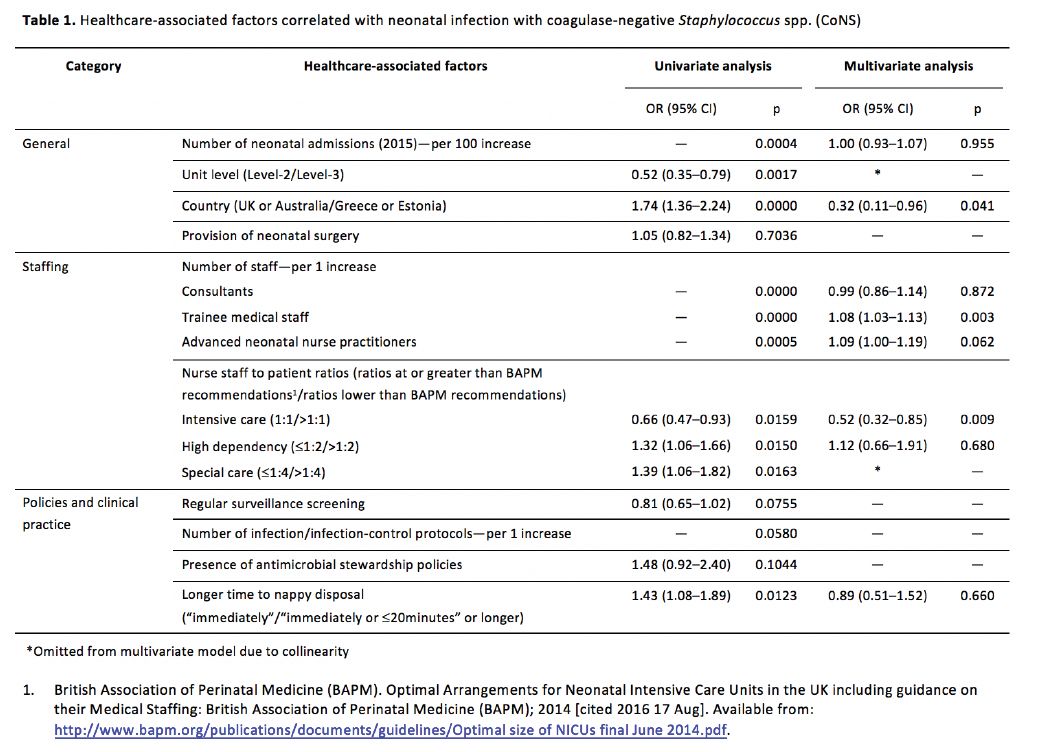
CONCLUSIONS: Our study provides novel insights into healthcare-associated factors and their importance in CoNS infection. Failure to meet intensive care nurse:patient ratio recommendations was a significant risk factor for CoNS infection, underscoring the imperative of instituting adequate staffing. Increasing numbers of trainee medical staff and geography were additional risk factors; further investigation may explain these associations.